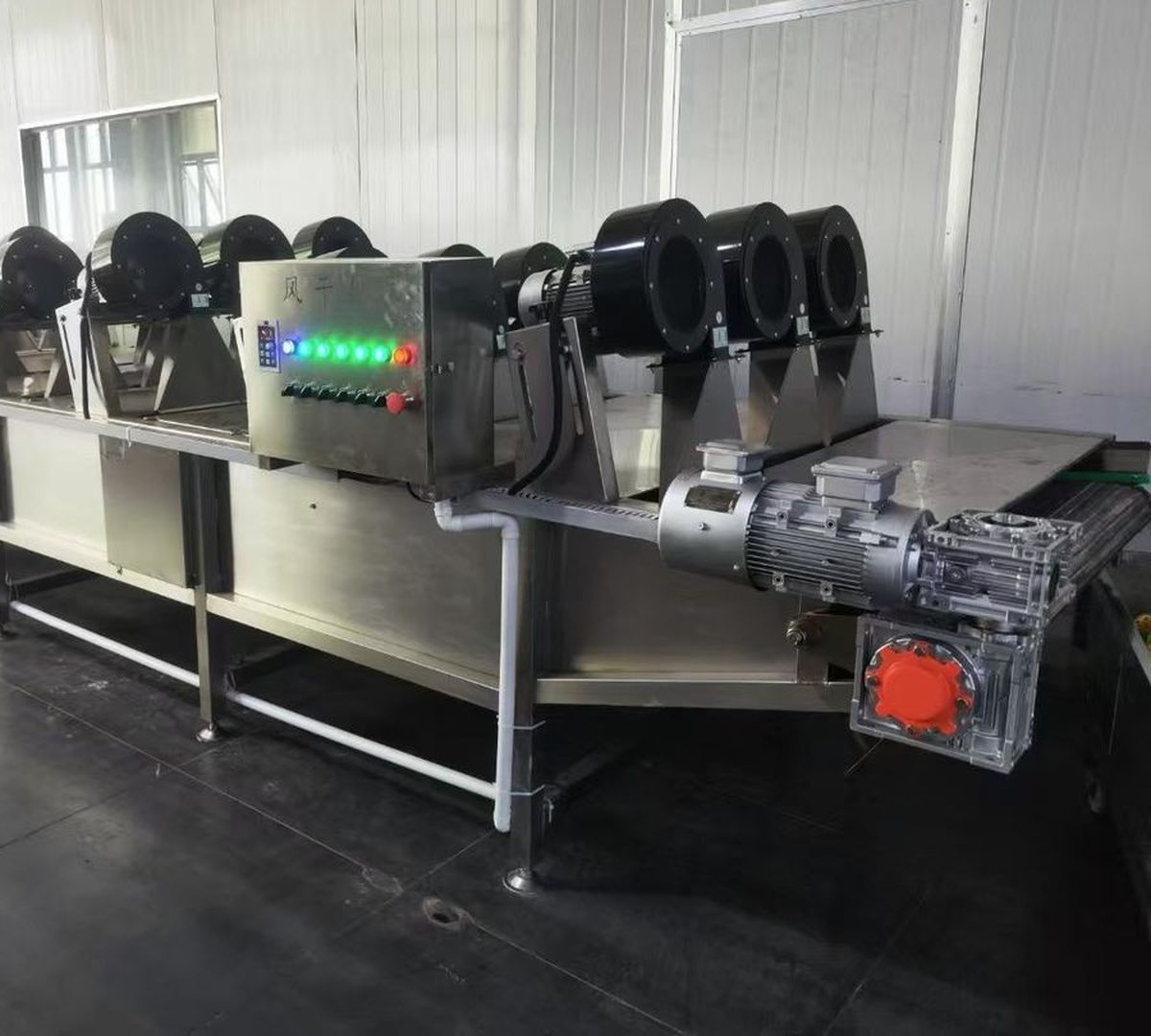
Packing & inspection
Inspection Conveyor
A lit, slow belt where every piece can be seen
Final inspection needs the product spread out, lit from above and moving slowly enough to be looked at. An inspection conveyor is built for that: single-layer spreading, controlled lighting and a reject chute within reach.
Belt width and speed follow the pack size: small pieces need a slower belt and a narrower spread than whole leaves.
Capacity, dimensions, motor brand and control system are not fixed on this page — they are confirmed per order against your product and your site.
All 32 equipment types · Image gallery · Engineering & drawings · How it is produced
Product is metered onto a wide, slow belt under a lighting bar; inspectors remove defects into side chutes, and accepted product continues to packing.
| Option | Typical choices |
|---|---|
| 01 | Lighting bar |
| 02 | Side reject chutes |
| 03 | Single-layer spreading |
| 04 | Variable speed |
| 05 | White food-grade belt |
| Item | Basis |
|---|---|
| Product contact material | SUS304 food-grade stainless steel (where the product is in contact) |
| Construction | Welded frame or tank, wash-down friendly detailing |
| Drive / control | Agreed per project — fixed or variable speed, PLC where required |
| Capacity and dimensions | Not stated on this page — confirmed in the technical offer |
| Utilities | Power, water, air and drainage agreed per site |
| Belt width | Set by the pack size and inspection rate |
No capacity, power or dimension figure is stated on this page, because those values follow the product, the pack size and the site. Ask for the technical offer with the current parameters.
Tell us what you process and the output you need per hour. We will come back with the configuration that fits, and the points still to confirm.