Blanching & cooking
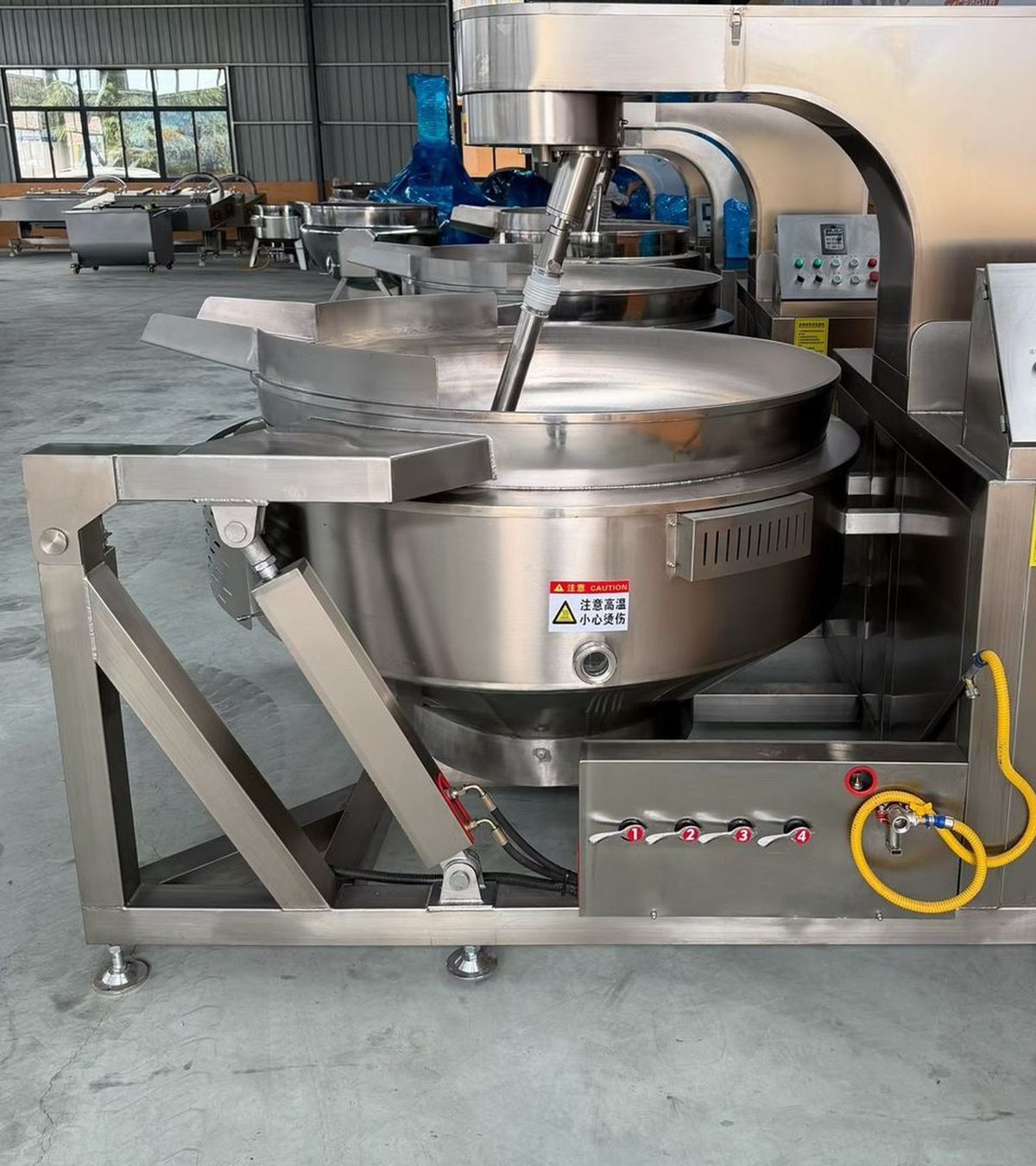
Jacketed Cooking Kettle
Indirect heating for sauces, soups and fillings
A jacketed kettle heats through the wall rather than through a flame or an immersed element, which is what keeps thick product from scorching. The jacket carries steam, hot water or heat-transfer oil depending on what the site can supply.
Agitator type — scraper, anchor or paddle — follows the product: a scraper for thick puree, a paddle for product that must not be broken.
Capacity, dimensions, motor brand and control system are not fixed on this page — they are confirmed per order against your product and your site.
All 32 equipment types · Image gallery · Engineering & drawings · How it is produced
Heating medium fills the jacket around the vessel; product is heated through the wall while an agitator keeps it moving across the heated surface; discharge by tilt or bottom valve.
| Option | Typical choices |
|---|---|
| 01 | Steam, hot water or oil heating |
| 02 | Scraper / anchor / paddle agitator |
| 03 | Tilt or bottom discharge |
| 04 | Variable agitator speed |
| 05 | Temperature indication |
| Item | Basis |
|---|---|
| Product contact material | SUS304 food-grade stainless steel (where the product is in contact) |
| Construction | Welded frame or tank, wash-down friendly detailing |
| Drive / control | Agreed per project — fixed or variable speed, PLC where required |
| Capacity and dimensions | Not stated on this page — confirmed in the technical offer |
| Utilities | Power, water, air and drainage agreed per site |
| Heating medium | Chosen from what the site supplies |
No capacity, power or dimension figure is stated on this page, because those values follow the product, the pack size and the site. Ask for the technical offer with the current parameters.
Tell us what you process and the output you need per hour. We will come back with the configuration that fits, and the points still to confirm.