Cutting
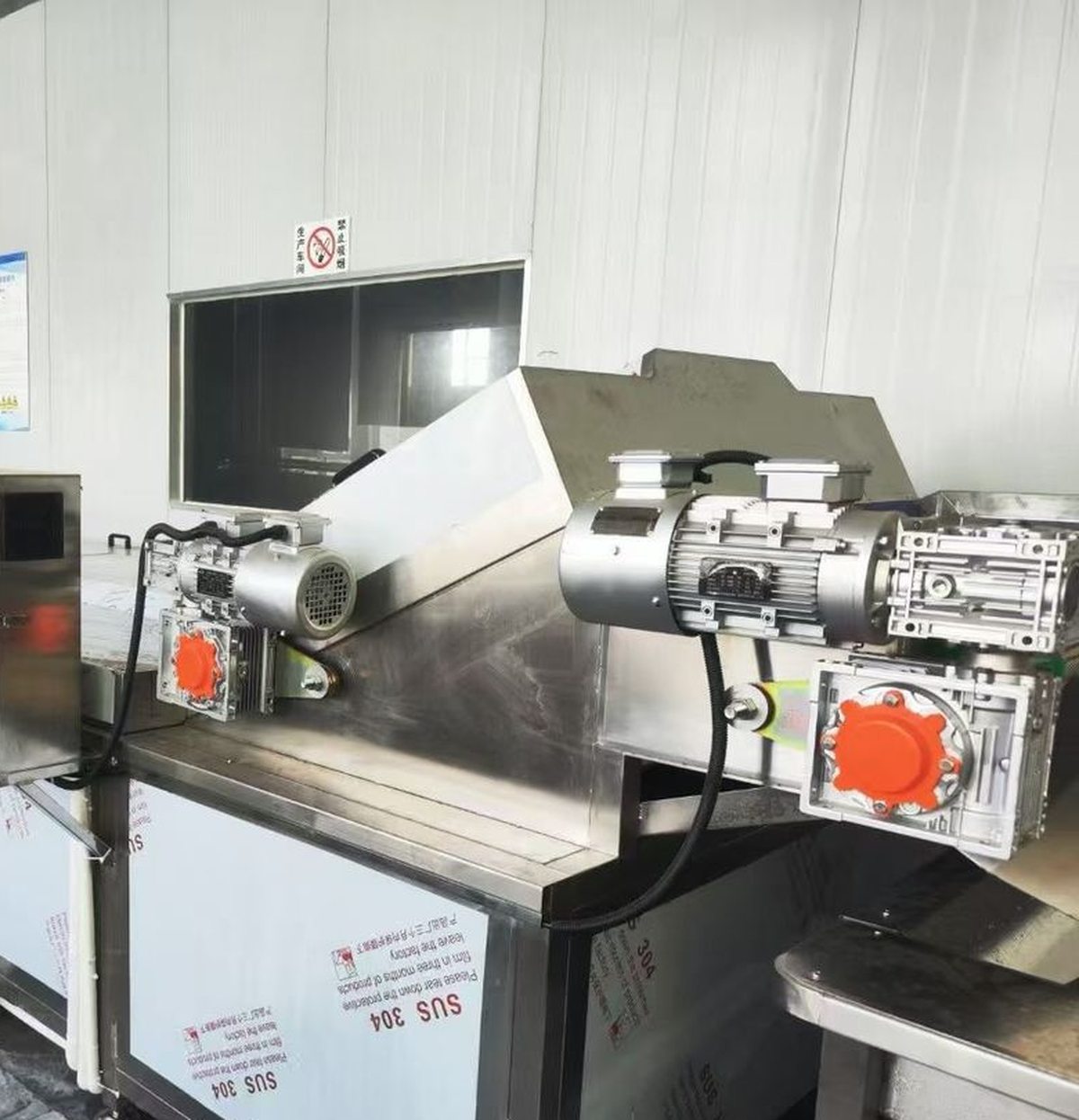
Vegetable Dicer
Uniform dice for packs, freezing and further processing
Dice size consistency decides how the product blanches, dries and packs. A dicer cuts in two directions with a grid blade, so every piece comes out the same size — unlike a single-blade chopper.
Blade sets are swapped as a unit, which makes a change from 10 mm to 20 mm dice a planned change-over rather than a rebuild.
Capacity, dimensions, motor brand and control system are not fixed on this page — they are confirmed per order against your product and your site.
All 32 equipment types · Image gallery · Engineering & drawings · How it is produced
Product is fed into a rotating impeller or belt feed that pushes it through a grid blade; the cut pieces fall through and are carried away by a discharge conveyor.
| Option | Typical choices |
|---|---|
| 01 | Grid blade sets per cut size |
| 02 | Impeller or belt feed |
| 03 | Discharge conveyor |
| 04 | Blade change tool kit |
| 05 | Second wash after cutting |
| Item | Basis |
|---|---|
| Product contact material | SUS304 food-grade stainless steel (where the product is in contact) |
| Construction | Welded frame or tank, wash-down friendly detailing |
| Drive / control | Agreed per project — fixed or variable speed, PLC where required |
| Capacity and dimensions | Not stated on this page — confirmed in the technical offer |
| Utilities | Power, water, air and drainage agreed per site |
| Cut sizes | Blade set dependent — stated in the offer |
No capacity, power or dimension figure is stated on this page, because those values follow the product, the pack size and the site. Ask for the technical offer with the current parameters.
Tell us what you process and the output you need per hour. We will come back with the configuration that fits, and the points still to confirm.