Technical centre
Engineering
Documentation
Nine document families, each issued for the project rather than as a generic brochure. Documents that do not exist for your equipment are not invented.
Drawings are approved before fabrication; manuals and parts lists are issued with the equipment; commissioning settings are recorded at handover.
Structure, drives and frames designed for the duty and for cleaning, not copied from a sample machine.
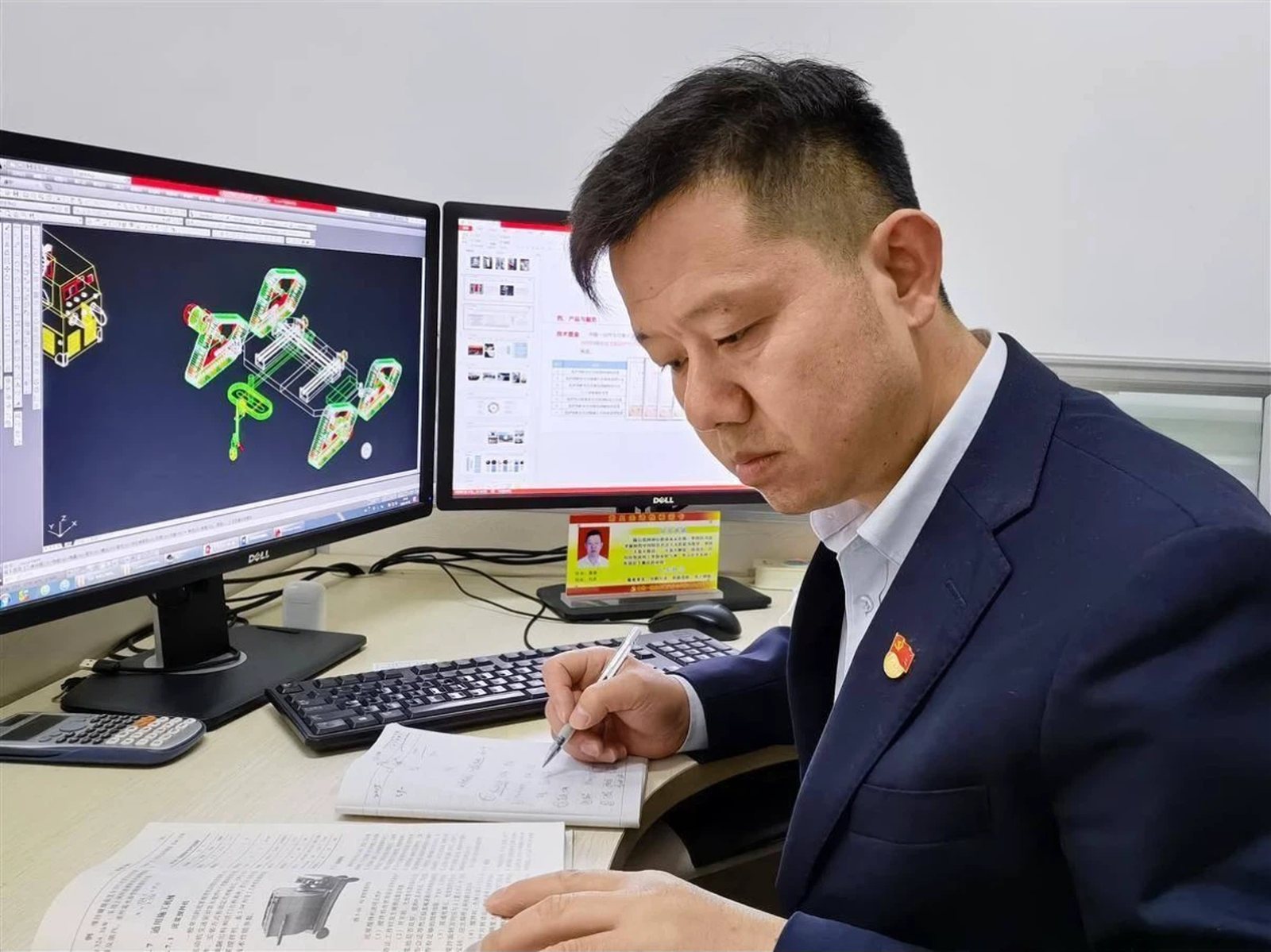
Equipment modelled in 3D before fabrication, so clashes and access problems are found on screen rather than in the workshop.
The line is drawn on your building plan: machines, transfers, operator positions, buffer sections and utility points.
Control cabinets wired to the schematic, with the terminal numbers matching the drawing set.
The specification is a project document: it describes the equipment offered, not a generic brochure figure.
One manual per equipment item: start-up, normal operation, cleaning, troubleshooting and the settings that were validated at commissioning.
Installation documents that tell the site team the order of work and what has to be ready before the equipment arrives.
A maintenance schedule by interval, written for the operators who will actually do the work.
Wear parts identified by position on the drawing, so a replacement can be ordered without a site visit.
| Document | Content | Issued |
|---|---|---|
| Arrangement drawing | Overall dimensions, inlet / outlet direction, maintenance clearance | For approval before fabrication |
| Interface drawing | Foundation, loads, power, water, air and drainage points | Before dispatch |
| Electrical schematic | Cabinet layout, terminals, control description | With the equipment |
| Operation manual | Start-up, cleaning, settings, troubleshooting | With the equipment |
| Maintenance guide | Intervals, lubrication, inspection points, record sheets | With the equipment |
| Wear parts list | Part, drawing position, material, inspection interval | With the equipment |
Related: Engineering design · Concept illustrations · Quality control
Send the product, the output and the site conditions; we reply with scope, equipment and the questions we still need answered.